Tamozawa Imperial Villa (田母沢御用邸), Nikko — A Retreat Built Across Three Eras
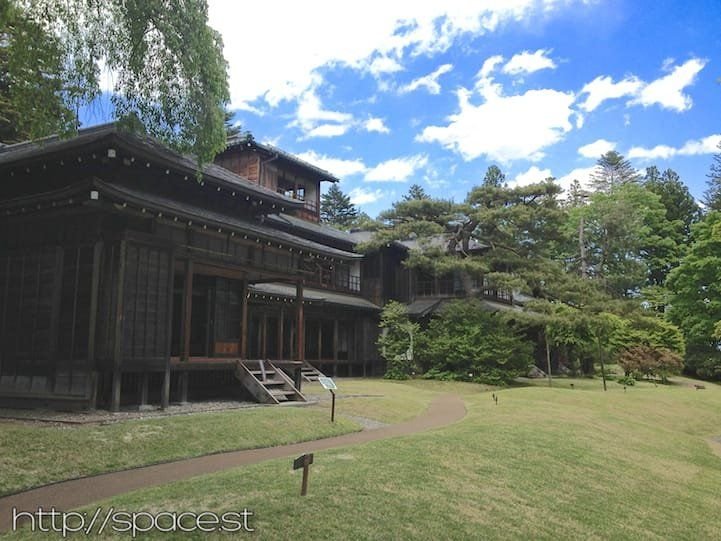
Tamozawa Imperial Villa is a former imperial summer retreat in central Nikko, created in 1899 around a relocated Edo-period Tokugawa residence. Blending late-Edo, Meiji and Taisho architecture across 106 rooms, it is one of the largest wooden buildings in Japan. Entry is ¥600. A short bus ride from central Nikko; base yourself at Earth Hostel Nikko Riverhouse.
In 1899, part of a former Edo-period residence of the Kishu Tokugawa clan — by then imperial property in Tokyo — was dismantled, transported to Nikko, and rebuilt as the core of a new summer retreat for the crown prince who would become Emperor Taisho. Around that older structure rose fresh Meiji-era wings, and a major Taisho-period expansion (1918–1921) gave the villa its present form: a seamless fusion of three architectural eras under one continuous roof.
At a Glance
| Created | 1899 (major expansion 1918–1921) |
| Architectural eras | Late Edo (1603–1867), Meiji (1868–1912), Taisho (1912–1926) |
| Rooms | 106 |
| Floor area | ~4,471 sqm — one of the largest wooden buildings in Japan |
| Grounds today | About one-quarter of the original size |
| Status | National Important Cultural Property (designated 2003) |
| Setting | Within Nikko National Park, beside the Toshogu shrine complex |
| Entry fee | ¥600 adult / ¥300 students (¥500 groups of 20+) |
| Best season | Spring to late autumn; autumn colour late October–early November |
| Access | 10 min by Tobu Bus from Tobu Nikko or JR Nikko Station; Tamozawa stop, ~1 min walk |
Base yourself at Earth Hostel Nikko Riverhouse — free shuttle from Tobu Nikko Station or (JR) Nikko Station, then a short bus ride. A riverside hostel on the Kurokawa, in the mountains of Nikko.
A Villa Created Around an Edo Residence
The heart of Tamozawa is older than the villa itself. Its current three-storey section was once part of the Kishu Tokugawa family’s middle residence in Edo (old Tokyo) — a building that had passed into imperial hands and served, for a time, as a temporary palace. In 1899 it was relocated to Nikko and incorporated into the lakeside villa of Kobayashi Toshiyasu, a Nikko-born Meiji banker, with new wings added around it.
The result is unusual: rather than a single design, the villa is a collection of structures from different decades joined so naturally that they read as one. After Emperor Taisho’s accession, a large-scale expansion between 1918 and 1921 brought it to its present scale. Three generations of emperors and crown princes used Tamozawa as a summer residence until 1947. During the Second World War Emperor Hirohito sheltered here, and the young Akihito was evacuated to the villa from 1944, staying for over a year.
106 Rooms Where Emperors Lived
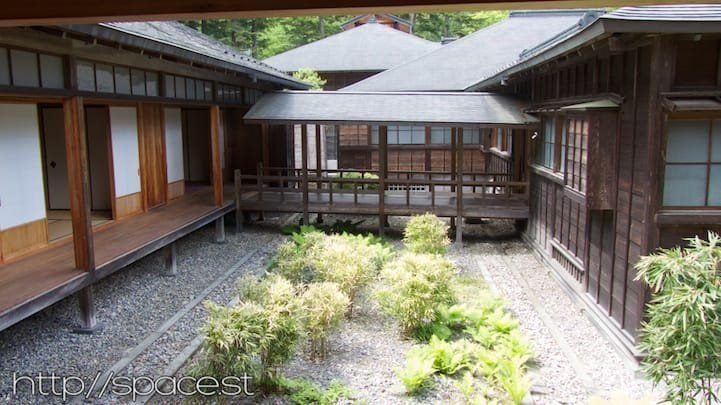
With around 4,471 square metres of floor space under a roof that runs almost unbroken across the whole estate, Tamozawa is the largest surviving imperial villa of the Meiji and Taisho periods, and one of the largest wooden buildings in the country. Inside, its 106 rooms shift between worlds: tatami floors and sliding paper screens in the Japanese tradition give way, elsewhere, to carpeted floors, billiard tables and chandeliers — the Western tastes that swept Japan’s nobility in the early twentieth century.
The detail rewards a slow walk. The patterns woven into the tatami edging, the covers concealing the beam screws, the choice of timber and joinery — much of the interest is in how the building was made, not just who slept here. Multilingual displays throughout explain what you’re looking at.
The Gardens
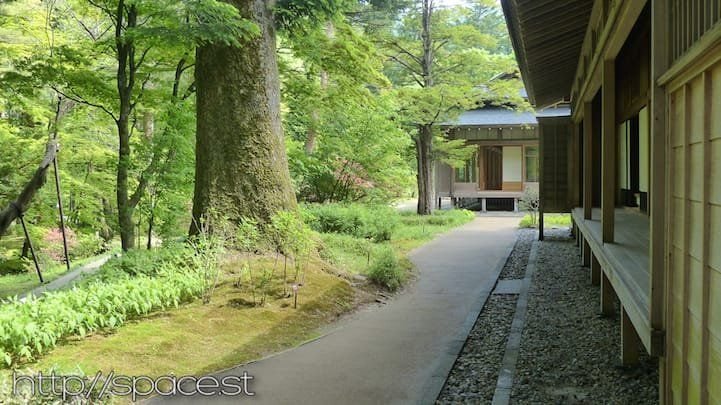
The villa sits inside a manicured Japanese garden of ponds, cherry and maple trees, framed by cedar woods and the forested hills of Nikko National Park. The standout is a weeping cherry (shidarezakura) estimated at 300–350 years old — older than the villa, a survivor from Kobayashi’s original garden, and spectacular in bloom. In autumn the maples turn through late October into early November. Even at peak season the grounds stay quiet compared with the shrine crowds a short walk away.
The grounds you walk today are only about a quarter of the original imperial estate. In 1950 most of the surrounding land — everything but the villa and part of its garden — was transferred to the neighbouring Nikko Botanical Garden, the University of Tokyo’s research garden, which still occupies much of the former imperial grounds and is open to the public next door in the warmer months.
Getting to Tamozawa
By bus: From Tobu Nikko Station or JR Nikko Station, take a Tobu Bus bound for Chuzenji Onsen, Yumoto Onsen, Okuhosoo or Kiyotaki and ride about 10 minutes to the Tamozawa stop (Nikko-Tamozawa-Goyotei-Kinenkoen, 田母沢御用邸記念公園). The villa is about a 1-minute walk from the stop. The fare is roughly ¥320–350 one way; the All Nikko Pass and Tobu day passes cover it — see our access guide.
On foot: The villa is about a 20-minute walk from the Toshogu shrine complex, along the Daiya River — an easy add-on to a shrine day.
By car: About 3.8 km (10 min) from the Nikko IC on the Nikko-Utsunomiya Expressway. A paid car park sits across the road on the north side (~¥300 for 2 hours), about a 5-minute walk to the entrance.
From Earth Hostel: Free shuttle to Tobu Nikko Station or (JR) Nikko Station (pickups 4:30 PM, 6:30 PM, 9:00 PM — from JR Nikko Station bus stand 1a or in front of Tobu Nikko Station; specify your train line), then the Tobu bus above.
Best Season
| Season | Conditions | Notes |
|---|---|---|
| Spring | Weeping cherry in bloom; skunk cabbage, yashio azalea | The 300-year cherry is the highlight |
| Summer | Cool and shaded under cedar; quiet interiors | A calm escape from the shrine crowds |
| Autumn | Maples turn late October–early November | Best season for the garden |
| Winter | Open but cold; closed Dec 29–Jan 1 | Bare structure, fewest visitors |
Closed Tuesdays (or the following day if Tuesday is a public holiday). Hours: 9 AM–5 PM April–October (entry to 4 PM); 9 AM–4:30 PM November–March (entry to 3:45 PM).
Combine With
- The Kanmangafuchi Abyss walk: The riverside path runs nearby, with Tamozawa at its upstream end — pair the villa with the Jizo statues along the Daiya River. See our Kanmangafuchi guide.
- A Nikko shrine day: Toshogu, Futarasan and Rinno-ji are about a 20-minute walk away — Tamozawa is the quiet counterpoint to the shrines’ grandeur.
- Nikko Botanical Garden: Right next door, on land that was once part of the imperial estate — the University of Tokyo’s research garden, open to the public in the warmer months.
- Earth Hostel Nikko Riverhouse: End the day back on the Kurokawa — a swim, the open-air lounge, fireflies and the Milky Way after dark.
Frequently Asked Questions
What is Tamozawa Imperial Villa?
A former imperial summer residence in Nikko, created in 1899 and used by three generations of emperors and crown princes until 1947. It is now a museum and memorial park.
How old is it?
The villa was created in 1899, but its core three-storey section is a relocated late-Edo Tokugawa residence that is considerably older. A major expansion in 1918–1921 gave it its present form.
How do I get there from Nikko Station?
Take a Tobu Bus bound for Chuzenji Onsen or Yumoto Onsen from Tobu Nikko or JR Nikko Station, about 10 minutes, and get off at the Tamozawa stop — about a 1-minute walk.
Is it worth visiting?
Yes — especially as a quiet break from the shrine crowds. It is one of the largest wooden buildings in Japan and one of the few places to see imperial domestic life up close, with multilingual displays throughout.
What’s the entry fee?
¥600 for adults, ¥300 for elementary and junior-high students; ¥500 for groups of 20 or more. The ticket covers both the villa and the garden.