Kanmangafuchi Abyss — Nikko’s Lava Rock Walk & Ghost Jizo
Kanmangafuchi (憑満ヶ淵, Kanman Abyss) is one of Nikko’s most quietly extraordinary places, and one of the least visited given how easy it is to reach. A short walk from the World Heritage shrine district, the Daiya River cuts through a gorge of ancient volcanic lava rock, creating a series of dark, dramatic pools and rapids. A cedar-shaded riverside path follows the water for 20–30 minutes past a row of moss-covered stone Jizo statues known as the Bakejizo — the Ghost Jizo — so named because visitors who count them going one way always seem to get a different total on the return. The walk is free, rarely crowded even in peak season, and deeply atmospheric at any time of year. It is one of the best off-the-beaten-path experiences in Nikko.
Walk at a Glance
Kanmangafuchi is a flat riverside walk through a volcanic lava-rock gorge in Nikko, lined with a row of weathered stone Bakejizo (“ghost”) Jizo statues. The path runs about 1.5 km one way, is very easy, free to enter, and beautiful year-round. It’s an easy add-on to a Toshogu shrine day. Base yourself at Earth Hostel Nikko Riverhouse.
| Distance | ~1.5 km one way (20–30 min each way) |
| Duration | 45 min – 1 hour round trip |
| Difficulty | Very easy — Grade I (flat riverside path) |
| Access | 15–20 min walk from Tosho-gu shrine area |
| Bus Stop | World Heritage Bus to Kanmangafuchi stop |
| Entry Fee | Free |
| Best Season | Year-round (beautiful in all seasons) |
| Highlight | Bakejizo ghost Jizo statues + volcanic lava rock gorge |
| Dog-friendly | Yes — flat, accessible path |
Stay at Earth Hostel Nikko Riverhouse — free shuttle from Tobu Nikko Station or (JR) Nikko Station. Kanmangafuchi is an easy add-on to a shrine visit day — 15 minutes from Tosho-gu, free, and uncrowded.
The Bakejizo — Ghost Jizo Statues
The defining feature of the Kanmangafuchi walk is the row of stone Jizo statues lining the riverside path. Jizo are Buddhist guardian deities, traditionally protectors of travellers, children, and the souls of the dead. The statues at Kanmangafuchi are mossy, weathered, and dressed in small red bibs and hats placed by worshippers — a common form of offering to Jizo across Japan.
These particular statues are called the Bakejizo — the Ghost Jizo, or Changing Jizo. The legend is simple: if you count the statues on your way along the path, and then count them again on the way back, you will always get a different number. Some blame the moss and the dim light for obscuring individual statues. Others prefer the supernatural explanation. The statues were originally placed here by the monk Tenkai in the early Edo period; many were lost over centuries to floods from the Daiya River, and the remaining count is genuinely uncertain. The legend resolves the uncertainty in the most satisfying way possible.
The Lava Rock Gorge
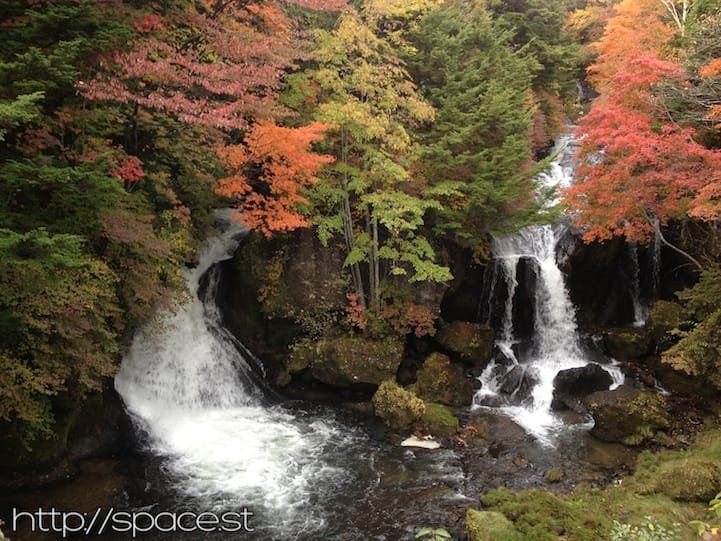
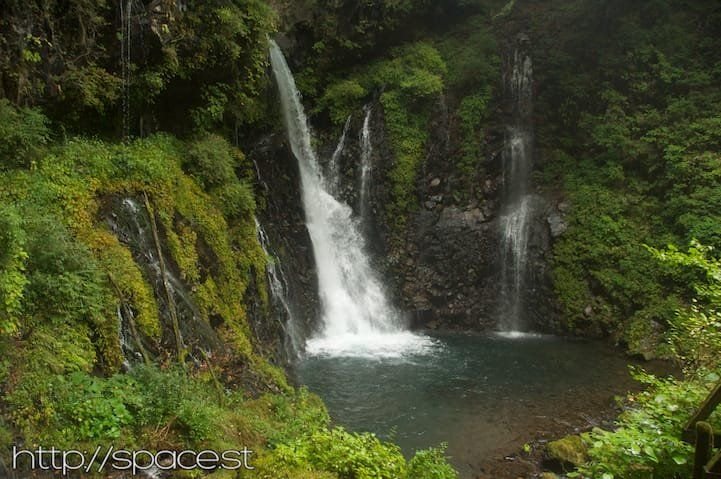
The gorge itself predates the statues by many thousands of years. The Daiya River here flows through a channel cut into ancient volcanic lava — the same eruptions from Mount Nantai that shaped Lake Chuzenji and much of the upper Nikko landscape. The lava created a series of angular pools and rapids where the river churns between dark, iron-rich rock faces. The sound of the water is constant throughout the walk.
The cedar forest on the path side — old-growth, dense, and fragrant — creates a shaded corridor that keeps the walk cool in summer and gives it a cathedral-like quality in every other season. In autumn, the few maple and beech trees interspersed with the cedars add colour without overwhelming the dominant green. In winter, with light snow on the Jizo hats and mist over the river pools, it becomes genuinely atmospheric.
Getting to Kanmangafuchi
On foot from the shrines: The most natural approach. From Tosho-gu Shrine or Shinkyo Bridge, walk west along the Daiya River for approximately 15–20 minutes. Follow signs for Kanmangafuchi. The path follows the river road, passes through a residential area, and then descends to the riverside entrance. The walk in from the shrine district is itself pleasant.
By bus: The World Heritage Bus (Tobu) stops at Kanmangafuchi — a flat fare of ¥200 from anywhere on the World Heritage Bus route. From Tobu Nikko or JR Nikko station, the ride takes approximately 5–10 minutes. The bus stop is a short walk from the path entrance.
From Earth Hostel: Free morning shuttle to Nikko Station, then the World Heritage Bus. Kanmangafuchi works well as a morning warm-up before the shrines, or as an end-of-day wander when the main shrine complex is closing and the crowds have dispersed. The riverside light in the late afternoon is particularly good.
The Walk
The path begins at the riverside entrance where the lava gorge first comes into view. The Daiya River is immediately below — dark, fast, and channelled between volcanic rock walls. Turn onto the main path and walk upstream.
The Jizo statues appear within a few minutes, lining the left side of the path in a long, irregular row. Count them. Take note of your number.
The path continues through cedar forest, passing several viewpoints where you can look down onto the river pools below. There are wooden observation areas at intervals. The light through the old cedars creates patterns on the path that shift with the time of day.
At the end of the main path section, a wooden bridge crosses the river with a view back along the gorge. This is the natural turnaround point. Return the same way — and count the Jizo again on the way back.
Best Season
| Season | Conditions | Notes |
|---|---|---|
| Spring (March–May) | Fresh green; high river from snowmelt; quiet | Cherry blossom nearby. Good season for early morning visit before shrine crowds arrive. |
| Summer (June–August) | Cool and shaded; river full; lush cedar canopy | Excellent escape from summer heat. The gorge stays cool even on hot days. |
| Autumn (September–November) | Autumn colour in the interspersed maple trees; soft light | Good complement to shrine autumn visit. Less crowded than Ryuzu or Shinkyo Bridge. |
| Winter (December–February) | Snow on Jizo hats; mist over the river; very quiet | Most atmospheric season. Path is generally walkable. Bring warm layers. |
Combine With: Shrine Visit Day
Kanmangafuchi fits naturally into a Nikko shrine district day. The standard combination:
• Morning: Kanmangafuchi walk (45 min – 1 hour, uncrowded)
• Late morning: Tosho-gu Shrine, Rinnoji Temple, Futarasan Shrine (2+ hours)
• Afternoon: Shinkyo Bridge and Toyama Mountain hike (1.5 hours) if energy allows
• Return to Earth Hostel via shuttle from Nikko Station
Doing Kanmangafuchi first, before the main shrine crowds arrive, means you get the path to yourself. The shrine complex is at its best from about 9:30 AM onward once the first tour groups have moved through.
Frequently Asked Questions
What does Kanmangafuchi mean?
Kanmangafuchi (憑満ヶ淵) roughly translates to “the abyss of Kanman” — Kanman being an ancient Buddhist title. The gorge was historically a place of Buddhist practice and asceticism, associated with the religious traditions that built Nikko’s shrine complex.
Why are the Jizo called the Ghost Jizo (Bakejizo)?
The name comes from the legend that anyone counting the statues will always get a different number on the return journey. The actual explanation is mundane — many statues were lost to Daiya River flooding over centuries, and the remaining survivors are partly obscured by moss, lichen, and shadow. But “ghost statues that change number” is far more satisfying.
Is there an entry fee for Kanmangafuchi?
No — the walk is completely free. The Kanmangafuchi abyss is public, open at all hours, and requires no ticket. This is distinct from the World Heritage shrine complex nearby which charges an entry fee.
How do I get to Kanmangafuchi from Nikko station?
Take the World Heritage Bus to the Kanmangafuchi stop (¥200 flat fare, approximately 5–10 minutes). Alternatively, walk from Nikko station or the shrine district in approximately 15–20 minutes following the Daiya River west.
Is Kanmangafuchi suitable for children?
Yes — the path is flat, well-maintained, and entirely safe. Children typically find the ghost Jizo legend compelling. The river views from the observation points are striking without being dangerous.
Visit Kanmangafuchi from Earth Hostel
Kanmangafuchi is a ten-minute bus ride from Nikko Station and fifteen minutes on foot from the shrines — close enough that it should be on every guest’s itinerary regardless of how much time they have in Nikko. It is consistently one of our favourite recommendations for guests who have already seen the shrines and want something quieter, stranger, and less photographed. The ghost Jizo always deliver. See all hiking trails in Nikko ›
Also consider: Nikko vs Kamakura | Nikko vs Hakone
Kanmangafuchi is open year-round and free of charge. River levels can be high in spring snowmelt season — stay on the marked path.