Snow Hiking in Senjogahara — Nikko’s Best Off-Season Trail
Senjogahara is Nikko’s best off-season hike: a 6.3 km boardwalk across a 1,400 m highland plateau that transforms under snow in two short windows — the last two weeks of March and the first two of November. The boardwalk stays walkable, buses still run, the light is extraordinary, and almost nobody is there. Easy but cold; dress in layers. Base yourself at Earth Hostel Nikko Riverhouse.
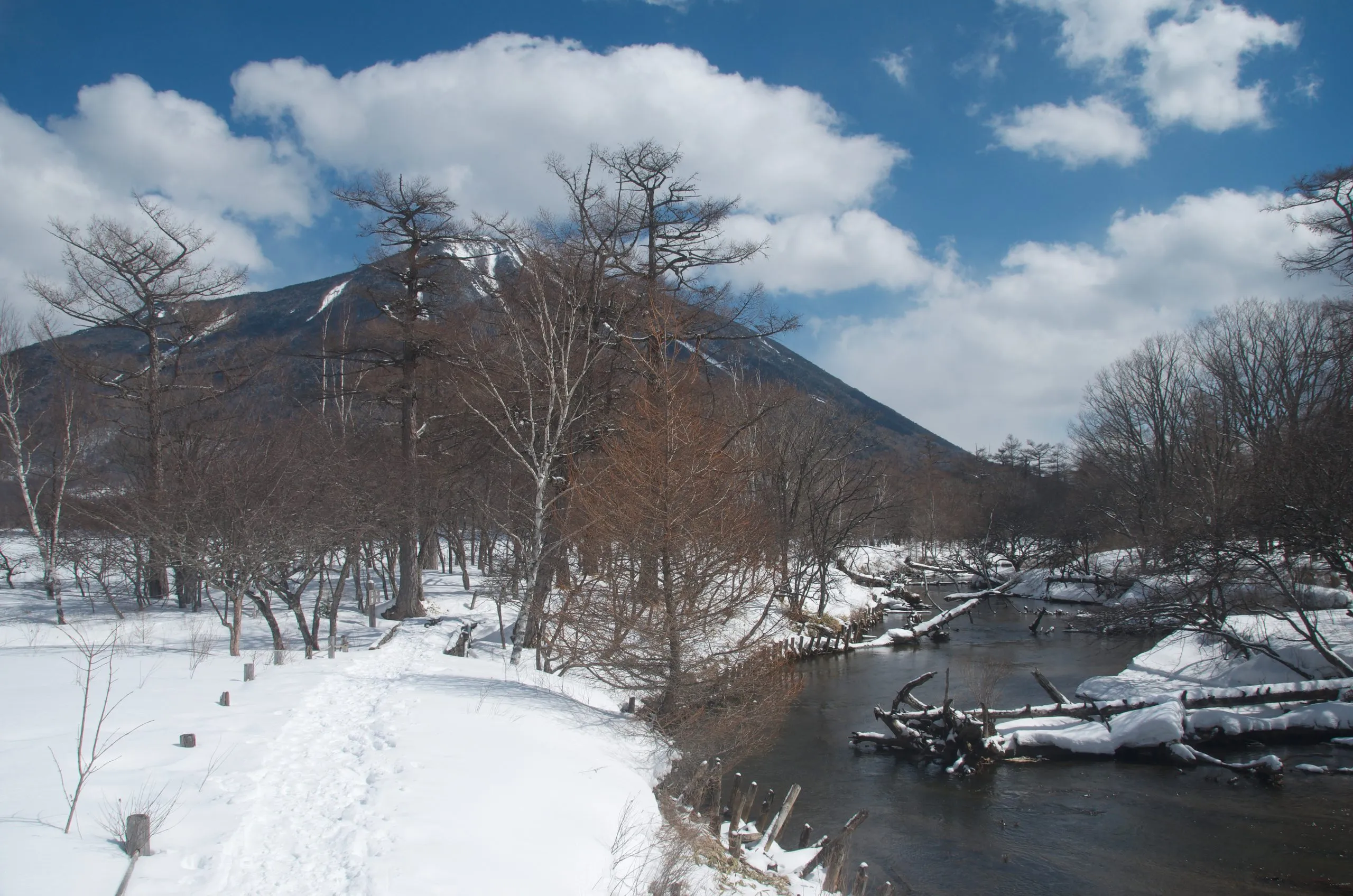
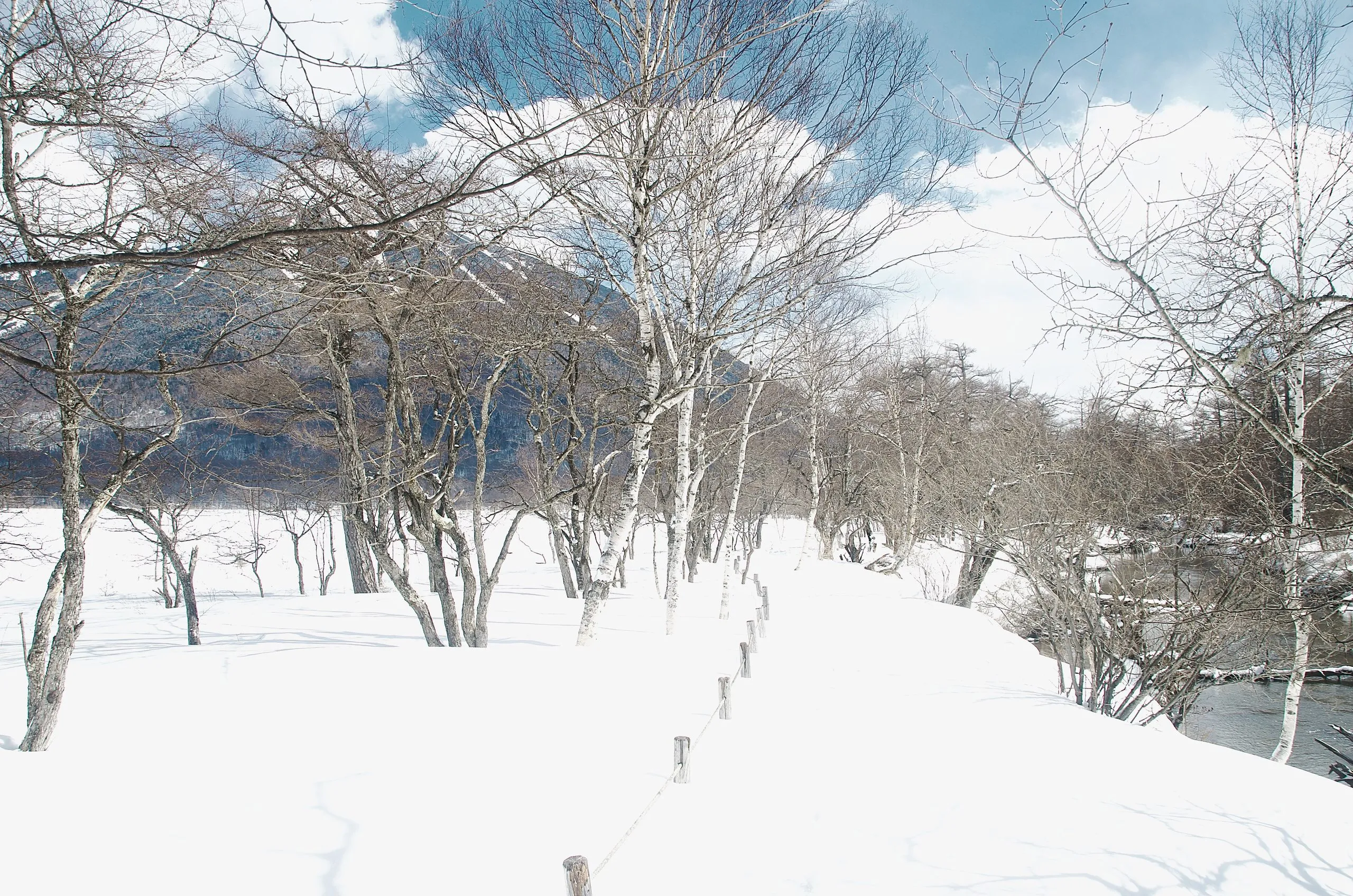
There are two windows each year when Senjogahara becomes something different: the last two weeks of March, and the first two weeks of November. In both windows, the plateau carries a covering of snow — but the temperatures are manageable, the buses are still running, and the trail is walkable. The boardwalk keeps feet clear of the snow in most sections. The light is extraordinary: winter-bright and low-angled, casting long shadows across the white plateau while Nantai and Nyoho mountains rise sharp and clear to the south and northeast. Almost nobody else is there. This is the off-season version of one of more than two dozen routes in our Nikko hiking guide. This page is a dedicated guide to hiking Senjogahara in snow conditions — for the main summer/autumn guide, see our full Senjogahara trail guide.
Snow Hiking at a Glance
| Distance | 6.3 km (main trail, one way) |
| Duration | 2.5–5 hours |
| Difficulty | Easy — Grade I (boardwalk; waterproof boots essential) |
| Best Snow Windows | Last 2 weeks of March • First 2 weeks of November |
| Temperature | Cold but manageable — dress in layers, bring gloves |
| Elevation | ~1,400 m (plateau) |
| Bus Access | Tobu Bus to Ryuzu Waterfall — confirm seasonal schedule |
| National Park | Yes — Nikko National Park |
Base at Earth Hostel Nikko Riverhouse — confirm the current bus schedule before departing. The hostel team hikes Senjogahara in snow conditions and can advise on gear and timing.
Why Hike Senjogahara in Snow?
The case for snow-season Senjogahara is simple: almost nobody else goes, and the plateau is extraordinary under snow. In summer and autumn, the trail can be busy on weekends. In the late-March and early-November snow windows, you may have the entire boardwalk to yourself for hours.
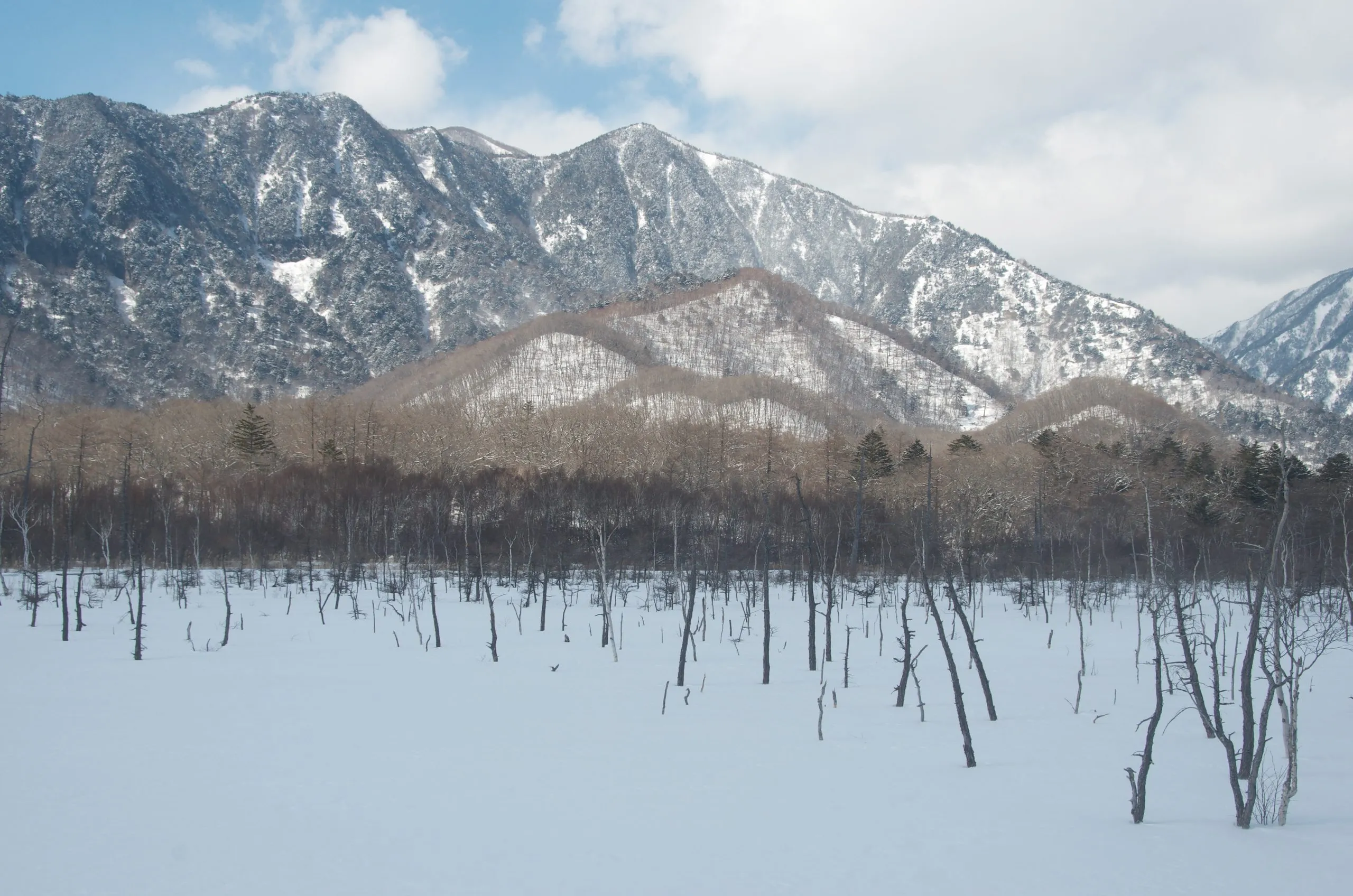
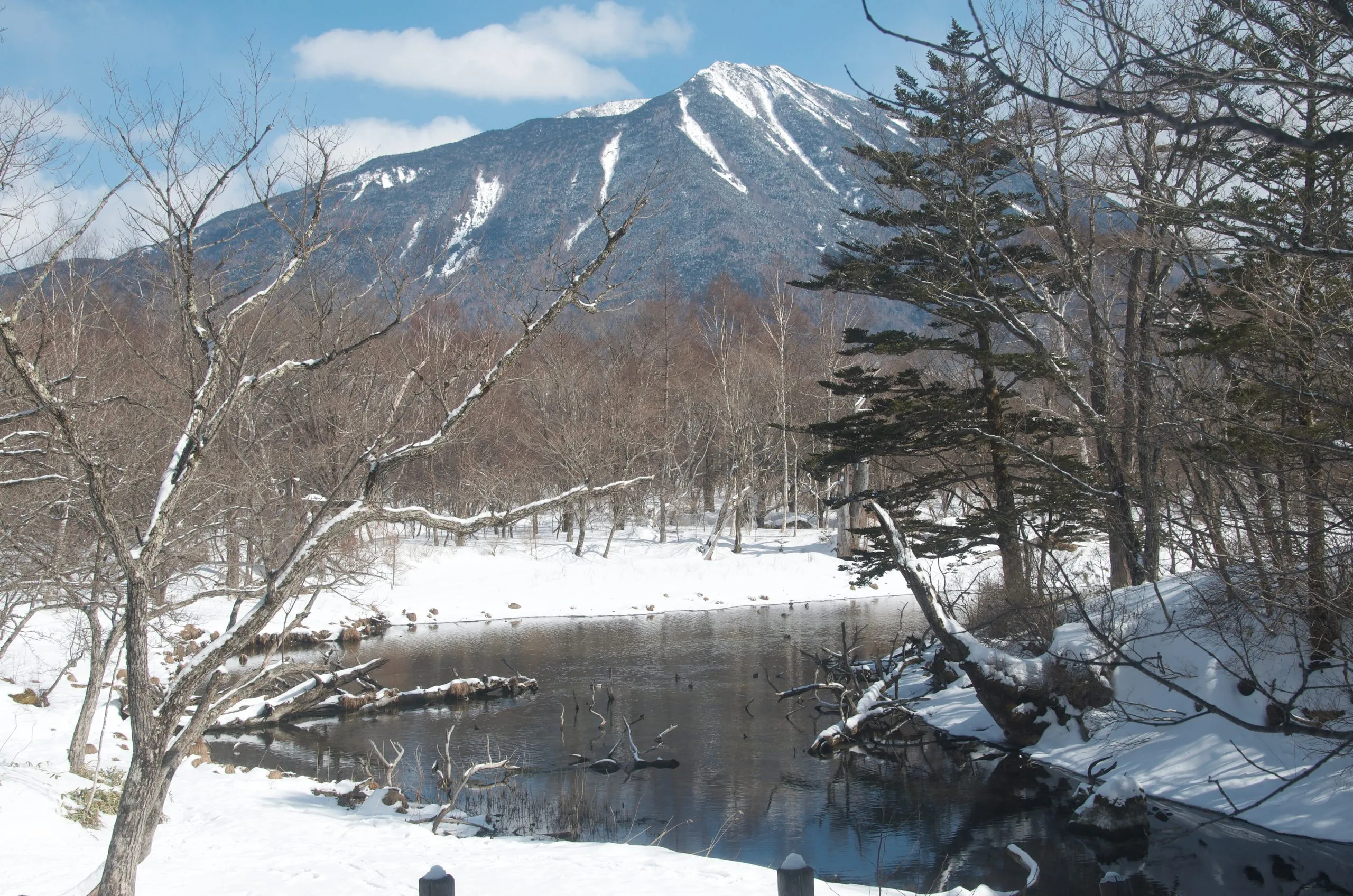
The plateau at 1,400 m is about 800 metres higher than Nikko town and Tobu/JR Nikko station — enough altitude difference that snow settles here while the valley is cold but dry. The light in these transition seasons is winter-quality: bright, directional, and long-shadowed. Mountain views are often clearer in late March and early November than in the hazy summer months. Nyoho Mountain appears to the northeast above the plateau, and Nantai Mountain is unobstructed to the southeast.
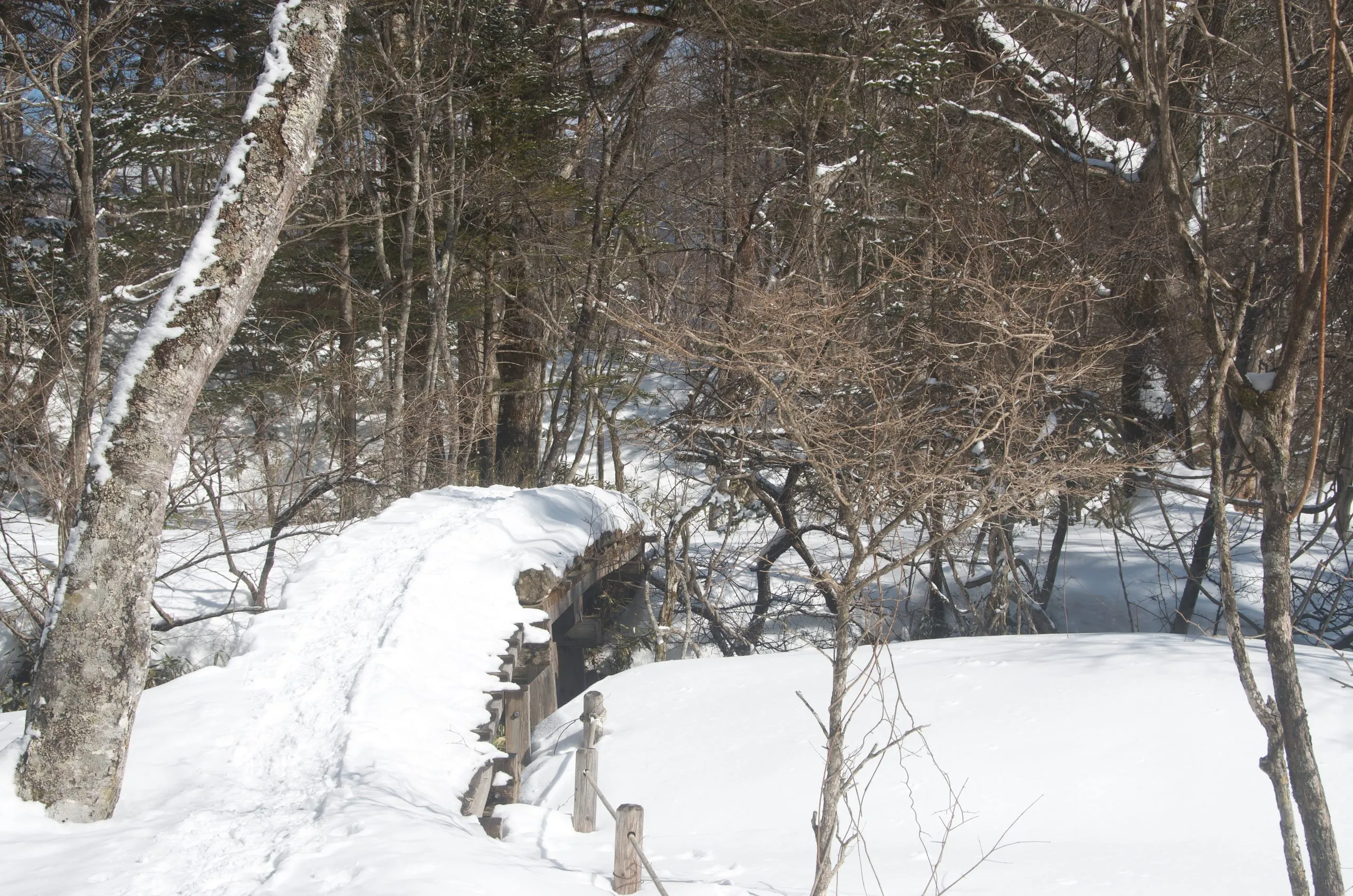
The wooden boardwalk keeps the trail navigable. In deep mid-winter, the trail is not recommended because buses stop running. In the two snow windows described here, the boardwalk remains clear enough to walk without specialist gear.
The Two Snow Windows
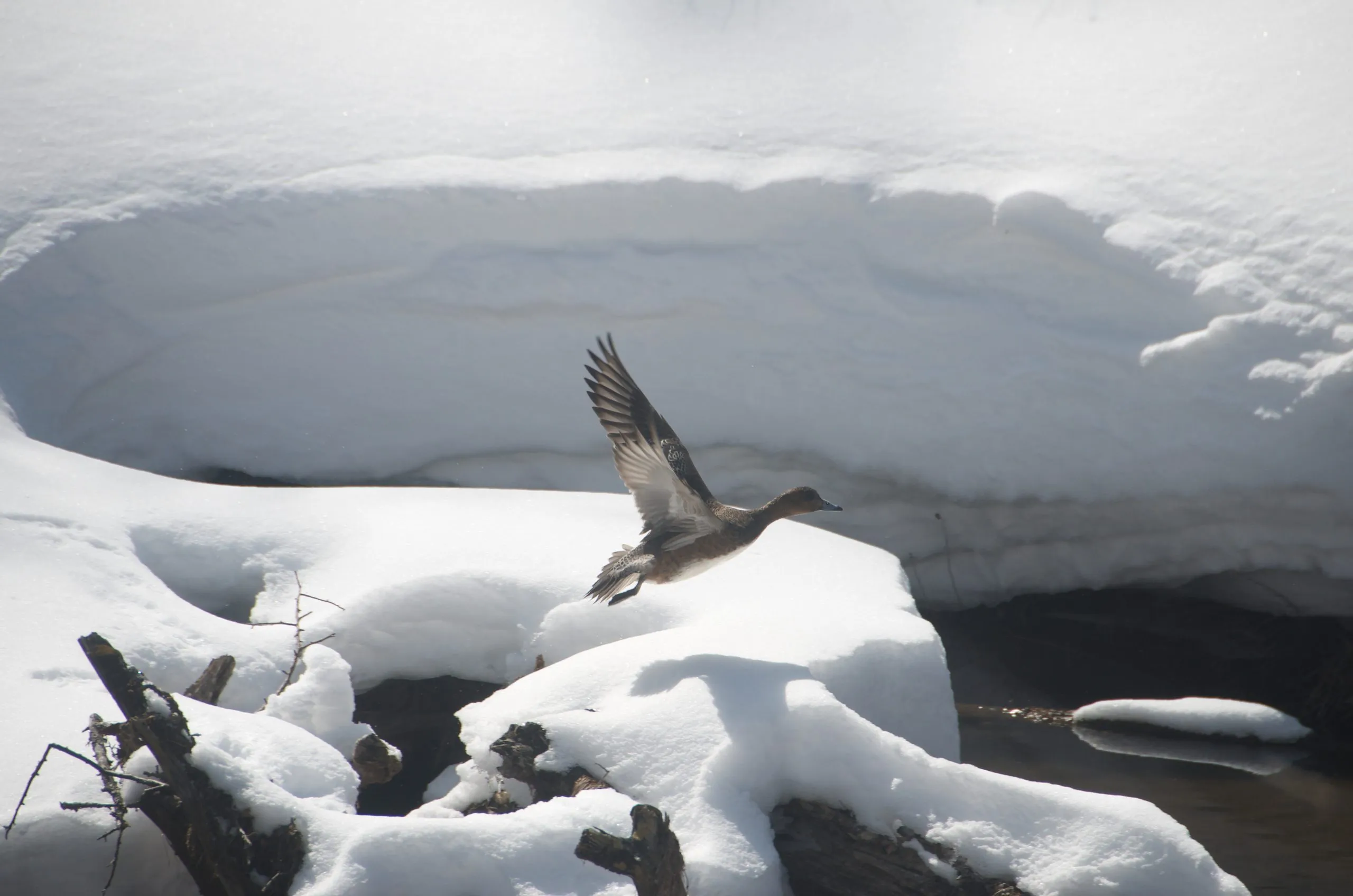
Late March (last two weeks): Snowmelt is beginning at lower elevations but Senjogahara plateau retains its winter snow covering. The creek along the trail — the Yu River (Yukawa) — is still partially ice-edged and the marsh grasses are pressed flat under snow. Ducks are often present on the open water sections. Days are lengthening and temperatures are cold but not extreme. This is the quietest time of year on the trail by a considerable margin.
Early November (first two weeks): The first fresh snowfall of the season. The autumn foliage at lower elevations may still be in progress while the plateau carries fresh white snow — a combination that produces some of the most dramatic landscapes in the Nikko area. By mid-November the bus schedule to the plateau becomes unreliable; early November is the window.
Getting There in Snow Season
The bus situation in snow season requires checking before you go. The Tobu Bus route to Ryuzu Waterfall (the standard Senjogahara trailhead) runs on a reduced schedule in early spring and late autumn. Some days it does not run at all.
By bus: From Tobu Nikko or JR Nikko station, take the Tobu Bus toward Yumoto Onsen. The Ryuzu Waterfall stop (Ryuzu-no-taki) takes approximately 40–50 minutes from Nikko station. Buy the All Nikko Pass or Yumoto Onsen Pass before departing. Check the current Tobu Bus timetable the evening before — schedules change in the shoulder seasons.
By car: The road to Senjogahara (Irohazaka route) remains open in these snow windows. Parking at Ryuzu Waterfall is available. An early start by car is ideal in late March and early November.
From Earth Hostel: The free morning shuttle runs to Nikko Station regardless of season. Ask the hostel team about the current bus situation before you go — we track the Tobu Bus timetable and can confirm whether the route is running on your day.
What to Wear and Bring
Snow hiking on Senjogahara does not require specialist winter gear, but preparation matters:
- Waterproof boots (essential — the boardwalk edges and off-board sections will be snowy and wet)
- Warm waterproof jacket and trousers (the plateau is exposed to wind)
- Gloves and a warm hat (hands get cold quickly at 1,400 m in late March and early November)
- Layers — the exertion of walking warms you up considerably; ability to adjust is key
- Thermos of hot drink
- Trekking poles (optional but helpful on any icy boardwalk sections)
- Microspikes (optional — the boardwalk is usually fine without; carry if you plan to go off-trail)
- Bus pass and confirmed timetable
Frequently Asked Questions
When is the best time to hike Senjogahara in snow?
The two ideal windows are the last two weeks of March and the first two weeks of November. Both offer snow without extreme temperatures and, critically, the bus to Ryuzu Waterfall is still running. Outside these windows, either the snow is gone (summer) or the buses are unreliable (deep winter).
Is the Senjogahara boardwalk safe in snow?
Generally yes — the wooden planks are elevated above the snow on most sections, and the walk is flat enough that footing is manageable. If there has been overnight freezing, isolated icy sections can appear. Waterproof boots with some grip are essential; microspikes are optional insurance.
Do the buses run to Senjogahara in late March and early November?
Yes, but on a reduced schedule. Confirm the current Tobu Bus timetable the day before. Ask at Earth Hostel — the team checks bus schedules regularly and can tell you if the route is running and when.
How cold is it on the Senjogahara plateau in late March?
At 1,400 m and in late March, expect temperatures of 0–8°C during the day. Wind on the exposed plateau makes it feel colder. Dress in layers and bring gloves and a warm hat regardless of what the valley forecast says — the plateau is consistently colder.
Is it the same trail as the summer Senjogahara hike?
Yes — the same 6.3 km boardwalk trail from Ryuzu Waterfall to Yumoto Onsen. For the full trail description, access, and seasonal table, see our main Senjogahara guide. This page focuses specifically on the snow hiking experience.
Plan Your Snow Hike from Earth Hostel
Earth Hostel is open from spring to late autumn, which covers both snow windows. We have hiked Senjogahara in snow conditions many times and are happy to advise on the current trail status, bus schedule, and ideal gear. The morning shuttle gets you to Nikko Station for the first bus of the day — essential for making the most of daylight in the shoulder seasons. See all hiking trails in Nikko ›
Bus schedules to Ryuzu Waterfall in late March and early November change annually — always confirm before departing. Trail conditions vary by snowfall; heavy snow years may make the boardwalk more challenging.